
In 2026, consumers no longer ask ‘what to buy,’ but ‘why they buy.’
The 2026 consumer is far removed from the rational purchaser described in traditional economics textbooks. In a society where technology is rapidly changing, uncertainty persists, and stress is a daily reality, consumption is no longer merely a matter of price, function, or performance. Now, before selecting a product, consumers first ask, “What emotional meaning does this choice give me?” and “What role does this brand play in my identity?” This is not a simple shift in taste, but rather a transformation of consumption into a core mechanism reflecting human psychology, identity, and social position.
The report that most clearly illustrates this trend is Trend Korea 2026. The report defines this year’s core consumption keyword as Feelconomy, explaining that “the emotional satisfaction a consumer feels has become a more important selection criterion than the product’s function.” Rather than weighing practicality and rationality, consumers prioritize the “lingering feeling” a brand creates. For example, even in simple acts like drinking coffee or choosing a dessert, the purchase criterion is not the taste or price, but whether the choice “aligns with my emotions today.” It is at this point that consumption ceases to be a mere economic act and becomes an extension of emotion and part of one’s self-narrative.
The same phenomenon is evident in the global market. Euromonitor’s 2026 Global Consumer Trends highlights ‘Fiercely Unfiltered’ (identity-based consumption) as the most powerful consumer shift this year. It analyzes that consumers no longer follow the idealized images presented by brands, but instead make choices that truly reflect their values, individuality, and identity. Gen Z consumers, in particular, evaluate brands based on their feelings and identity rather than the ‘correct answers’ prescribed by society. They are the quickest to turn away from brands lacking authenticity and actively champion smaller brands that align with their worldview. This trend shows that the market power balance in 2026 is shifting from large corporations to smaller, emotion-based brands with strong identity appeal.
Feelconomy — Emotion Becomes the New Price Tag
Emotion-based consumption is an indispensable concept for understanding the 2026 market. Trend Korea 2026 defines Feelconomy as “an era where the emotions a consumer feels become the brand value,” emphasizing that the quality of the user experience is a more powerful selection factor than the product’s objective performance. This implies that consumption has become a means for regulating and structuring one’s emotions, not just an act of consuming goods.
Gen Z, in particular, exhibits distinct emotional consumption patterns. They prefer “brands that make them feel good,” believing that the atmosphere, sentiment, and narrative provided by the brand are more crucial than the product itself. For instance, they tend to choose products with a stronger brand story or emotional symbolism, even if they have the same function as competitors. Through consumption, they express themselves, showcase their worldview, and sometimes seek emotional stability and recovery.
The spread of emotion-based consumption is changing marketing strategies across industries. Companies are shifting away from stressing functional messages and instead building environments where consumers can connect themselves to specific emotions. The meaning of the product is redefined by the emotional experience it yields, and the price is perceived not merely as an exchange cost, but as the value paid for the emotional worth. In other words, consumers interpret price based on “what this product makes me feel,” rather than “how much it costs.”
Comfort Zone — In an Anxious Era, Consumers Buy the New Value of Stability
The reason 2026 consumers focus on emotion is not just a change in taste, but overwhelming fatigue and uncertainty covering society as a whole. According to a survey by Euromonitor, 58% of global consumers experience moderate to high levels of daily stress, and more than half are choosing “new ways of consumption that seek stability in life.” This trend has created a new movement called the Comfort Zone, where consumers prioritize predictability, stability, and emotional safety over stimulating experiences.
The core of the Comfort Zone is “Less but Better.” Consumers do not want complex choices. Instead, they seek products and services that simplify life, maintain emotional balance, and secure small everyday stabilities. For example, products that reliably offer basic functions are preferred over those with complex features, and quiet, comfortable spaces are favored over noisy, stimulating ones. The value brands must offer is no longer innovative technology, but a ‘peace of mind experience.’ This trend impacts university campuses, workplaces, homes, and urban life. In a high-stress era, consumers try to expand their sphere of control, and emotional stability becomes the center of life. Consequently, “products with simple usage,” “predictable user experiences,” and “services that enhance emotional security” are rapidly growing across all industries. Considering this trend extends to the consumption behaviors of higher education and the youth, the Comfort Zone is not just a consumer trend but a new cross-generational survival strategy.
Fiercely Unfiltered — The Explosion of Identity Consumption
Identity is at the heart of 2026 consumption. Euromonitor named “Fiercely Unfiltered (uncompromised self-expression)” as the most notable consumer trend this year. The report analyzes that over half of consumers feel their identity is “accepted in society” and are increasingly active in expressing themselves through consumption. This means consumption has evolved beyond choosing products to become a social language for expressing one’s existence. Gen Z and Millennials, in particular, no longer adhere to brand-prescribed images or ideal lifestyles. They only choose brands that acknowledge “me as I am.” Therefore, brand authenticity, message transparency, and the criteria behind product values have become core requirements for consumption. How a brand takes a stance on social issues, whether it reflects minority voices, and its honesty from an ESG perspective are no longer simple promotional strategies but criteria for evaluating its very existence.
This identity-based consumption poses a challenge to large brands. While brands that created mass appeal succeeded in the past, 2026 consumers boldly exclude brands that do not align with them. Instead, they support smaller brands that represent their identity, forming a community-centric economy. Euromonitor especially predicts that as consumers’ “unique tastes and worldviews” become clearer, the power of hyper-personalization, niche tastes, and micro-brands will grow. This suggests that the future market will be segmented based on identity diversity.
Price Decoding — The Meaning of Price is Changing
2026 consumers no longer view price merely as a number. Trend Korea 2026 points out that one of the year’s significant trends is “Price Decoding,” the process where consumers interpret the meaning of the price themselves. Consumers are curious not just about “how much,” but why the price is what it is, and what value and process it reflects.
This is a concept that has evolved one step beyond the past focus on ‘Cost-Effectiveness’ or ‘Value for Money (for the heart/mind).’ Consumers determine a purchase by interpreting the brand’s philosophy hidden within the price, the ethics of the production process, sustainability, quality control standards, and transparency in manufacturing and transport. Even for products at the same price point, a brand with a clear justification for its value gains more trust. For instance, an apparel brand using eco-friendly materials or a company emphasizing social value can provide consumers with a “reason to pay this amount,” even if the price is somewhat higher.
More interestingly, Gen Z uses price as an “identity signal.” They tend to select price points that reflect their values, rather than merely seeking the lowest price. Purchasing an expensive product is a choice of value, not ostentation, and purchasing a cheap one is a strategic choice to reveal their consumption philosophy, not just saving money. Thus, Price Decoding signifies that the consumer has evolved from a simple purchaser to an interpreter, evaluator, and value judge.
Rewired Wellness (Medicalized Wellness) — Health Spurs a New Industry
The fastest-growing sector in the 2026 consumer market is undoubtedly Rewired Wellness (Medicalized Wellness). Euromonitor 2026 selected Rewired Wellness as a key consumer trend this year, analyzing that consumers are incorporating clinical-level technology, diagnosis, medication, and data-driven management into their daily lives, moving beyond traditional wellness (exercise, rest, self-care).
A particularly noteworthy change is the popularization of GLP-1 class weight management drugs. These are not mere diet products but are expanding into metabolic management, obesity treatment, and behavioral pattern changes, reshaping the entire healthcare industry. Euromonitor predicts an explosive growth in the GLP-1 related products and supplements market in 2026 compared to 2025, interpreting it as “the beginning of medical-based consumption surpassing the traditional wellness industry.” Furthermore, DNA-based nutrition recommendations, personalized supplements, home diagnostic kits, and real-time tracking of blood pressure, sleep, and stress via smartwatches are no longer specialized domains. Gen Z and Millennials are accustomed to analyzing their health data to adjust their lifestyles, signifying that consumption has become “scientific self-management,” not just mere well-being. In other words, a new ecosystem is forming by combining medicine and consumption. This trend is reorganizing countless industries, including food, biotech, medical devices, and healthcare startups. Health consumption after 2026 will shift from sensory satisfaction or emotional recovery to data-driven optimization and prevention-focused precision wellness. This directly influences the public health, life science, and data science fields in universities, and the ability to understand the medicalized wellness market is becoming a new form of liberal education.
The Impact of Identity, Emotion, and Wellness Consumption Across Industries
When identity-based consumption, emotion-centric consumption, and medicalized wellness converge, the industrial structure inevitably changes. The core of the 2026 industrial shift is not technological competition, but “who understands the consumer’s emotions and identity most profoundly.” Euromonitor emphasizes that brands must now adapt to the consumer’s criteria to survive, as consumers no longer align themselves with the brand’s standards. This necessitates a redesign of the entire production, marketing, and customer management system
For example, the fashion industry can no longer rely on ‘universal beauty standards.’ Consumers choose brands that match their specific physical characteristics, cultural backgrounds, and identities, and brands that fail to reflect this diversity rapidly decline. In the food and cosmetics industries, customized solutions reflecting individual emotions, lifestyles, and wellness goals are becoming market leaders, over standardized products. Precision data-based product lines—such as DNA analysis, body composition measurement, and stress pattern analysis—rapidly secure market trust by offering consumers the clear value of being a “product for me.”
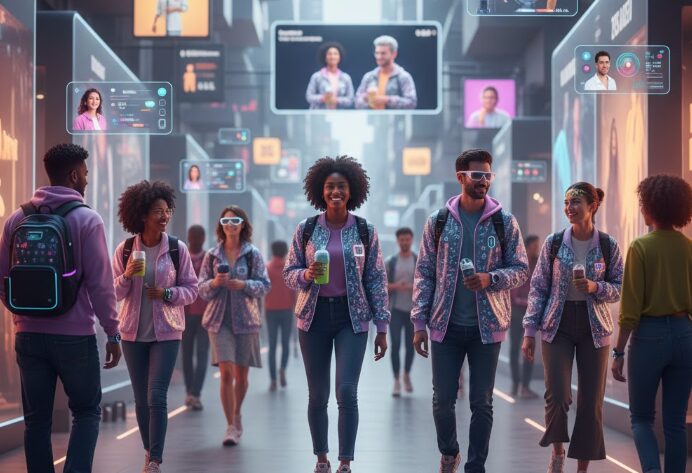
This change also blurs industrial boundaries. We are in an era where healthcare companies expand into the food industry, fashion brands operate wellness platforms, and tech companies analyze personal health data. This is due to the formation of an Experience Ecosystem centered around the consumer. Consumers are no longer buying a single product; they are choosing a world they want to belong to and curating the norms and emotional flow of that world through consumption. The companies that succeed in the 2026 market are not just those with superior functional innovation, but those willing to co-create the consumer’s worldview.
Implications for Korean Society and Universities — Gen Z is No Longer a Target for ‘Persuasion’
The 2026 consumption transformation provides critical signals not only to industries but to society as a whole, especially universities and youth policy. Gen Z is rapidly expanding its social influence, not just as future consumers, but as current learners, citizens, and workers. Thus, their consumption patterns reflect the generation’s values and behaviors, which directly impact education, policy, and the labor market
First, universities must restructure their admissions and educational messaging. Traditional promotions focused on ‘expertise, employment rates, and campus infrastructure’ are no longer sufficiently persuasive to Gen Z. They first evaluate “what emotional resonance does this university offer my identity,” and “does it have a system that respects and allows me to grow.” This means universities must demonstrate the authenticity of the experience, not just the brand. More important than departments, majors, or curriculum is the message of “what kind of person I can become by attending this university.”
Furthermore, the spread of medicalized wellness demands a fundamental change in university student support systems. The role of student counseling centers is moving beyond simple support to include data-driven health and stress analysis, AI-based recovery programs, and personalized wellness path design. Since Gen Z places high importance on their psychological stability and well-being as life criteria, the standard for a “good university” will change based on the university’s capabilities in this area.
Finally, Price Decoding has significant implications for university tuition, scholarship systems, and non-curricular program fees. Gen Z looks at “what value is contained” rather than the price itself. They will positively assess high tuition if it provides a systematic growth experience, trustworthy faculty, and an authentic learning environment, but ambiguous costs will cause distrust, even if the amount is small. In short, it has become essential for universities to transparently explain the meaning behind every cost.
The 2026 consumption change is not just a market trend; it reflects a shift in how humans understand the world. Consumers choose emotion over function, identity over brand, and scientific health management over simple well-being. As both Euromonitor and Trend Korea 2026 commonly point out, the core keywords for this year are authenticity, stability, personalization, and meaning. Identity-based consumption is reshaping the market to respect the world of each individual, and Price Decoding sends the message that brands can no longer hide. Medicalized wellness redefines health as a central life resource, and data interprets and scientifies the language of emotion. The focus for businesses, universities, and governments is no longer on technology or policy, but on what people feel and how they construct meaning.
The 2026 consumer is smarter, more sophisticated, and, above all, views the world more centered on themselves. The future they choose is shaped within a new market structure intertwined with emotion, identity, health, and data. The speed of change is fast, but the direction is clear. The person is at the center of 2026 consumption. Their emotion, identity, health, and the meaning of life.
#2026트렌드 #소비전망 #필코노미 #정체성소비 #ComfortZone #RewiredWellness #GLP1 #Z세대소비 #PriceDecoding #스포트라이트유 #라이프스타일2026 #FiercelyUnfiltered


답글 남기기