

![[Analysis] The AI-Driven Labor Market: How Will Universities Respond? – NYU and SUNY’s ‘Experiment of Validation’](https://www.spotlightuniv.com/wp-content/uploads/2026/01/20260118_05-300x161.jpg)
![[Review] Netflix’s “Can This Love Be Translated?”: The Most Beautiful Way to Correct the Heart’s Mistranslation](https://www.spotlightuniv.com/wp-content/uploads/2026/01/20260118_03-300x207.jpg)
![[Review] Materialists: A Relationship Analysis Report Disguised as a Romantic Comedy](https://www.spotlightuniv.com/wp-content/uploads/2026/01/20260115_17-300x196.jpg)
This post is also available in:
 한국어 (Korean)
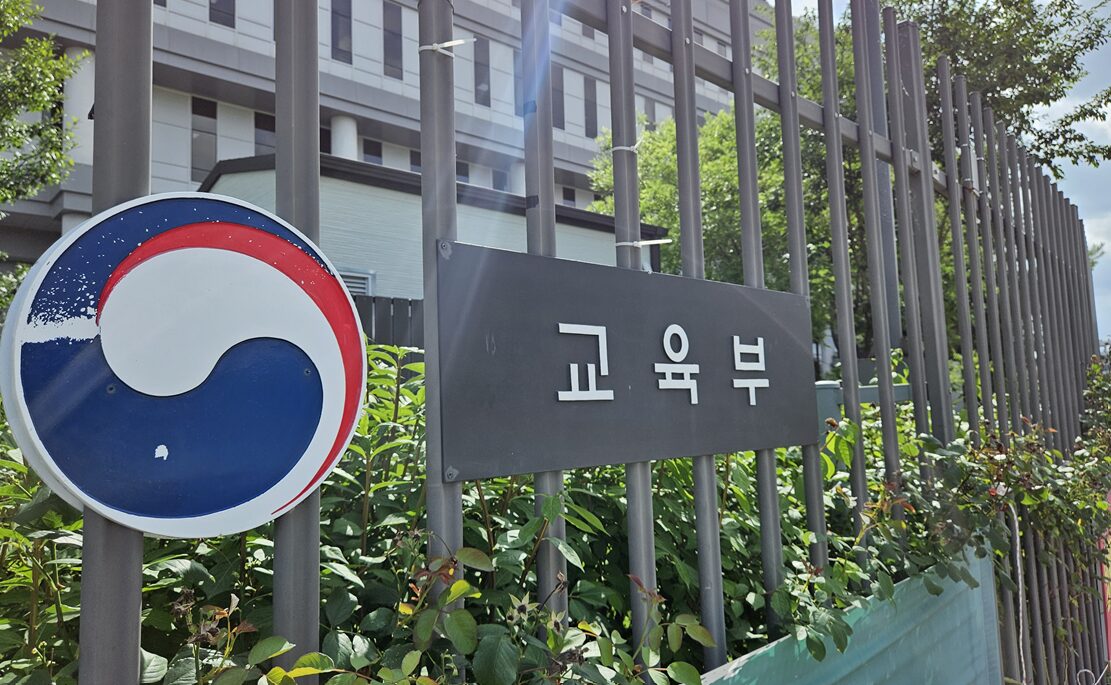
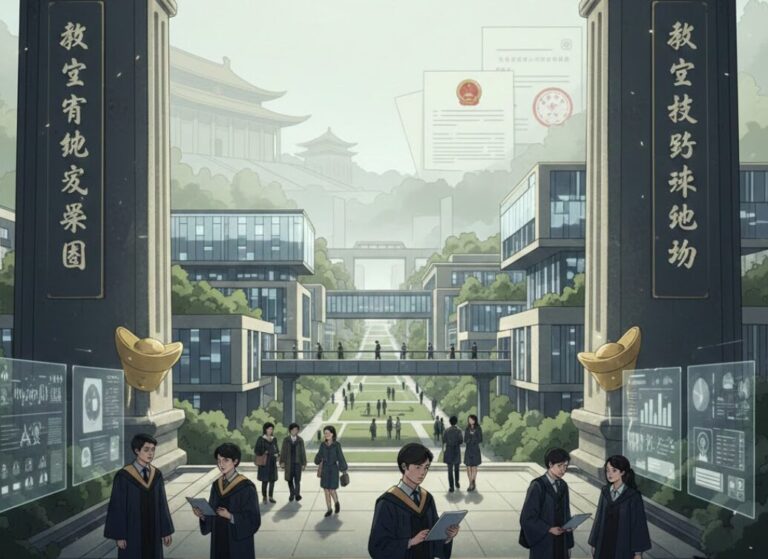
Ministry of Education’s ‘Exemplary Cases of University Regulatory Innovation’: Elevating Field Changes into Institutional Systems
Regulations surrounding universities have long been perceived as “targets for relaxation” and “obstacles to innovation.” However, evaluations suggest that the restructuring of higher education regulations over the past few years has moved beyond simple deregulation to act as a catalyst for actually changing the academic, organizational, and financial structures within universities. The cases of five universities selected by the Ministry of Education through the ‘2025 University Regulatory Innovation Excellence Case Contest’ demonstrate that regulatory improvement is not just a declarative slogan but leads to selection and execution in the university field.
On December 22, 2025, the Ministry of Education announced the results of the ‘2025 University Regulatory Innovation Excellence Case Contest,’ stating that five universities—Hoseo University, Soongsil University, Konkuk University, Hanyang Women’s University, and Wonkwang University—were selected as exemplary cases out of 23 submissions. This contest has been operated since last year to identify and improve regulations that have hindered autonomous innovation in universities and to share how actual institutional changes are being utilized in the field.
A characteristic of this contest is its focus on “how the already revised laws and systems were utilized.” The Ministry of Education has improved 125 regulations since May 2022 by amending the Enforcement Decree of the Higher Education Act and the Regulations on the Establishment and Operation of Universities. In the 2025 contest, various innovation cases based on these institutional changes—such as the establishment of departments in high-tech industries, adjustment of admission quotas, and expansion of the Major Free Choice System—were submitted. After expert evaluation, an online public screening was additionally conducted to reflect public perception before final selections were made.
Among the selected cases, Hoseo University and Soongsil University represent innovation in high-tech fields. Hoseo University utilized the Regional Innovation System & Education (RISE) project to establish three contract departments: Semiconductor Display, Advanced Industrial AI Engineering, and Logistics & Distribution. In this process, they actively utilized existing regulatory improvements—such as rules for installing and operating contract departments, standards for industry contributions, and permission to change implementation plans for university entrance examinations—and established a dedicated organization for contract departments to completely overhaul their academic and administrative systems. The distinctive feature is that they elevated the operation of contract departments into a permanent system of the university, rather than a mere expansion of departments.
Soongsil University established a College of AI with an admission quota of 160 students through its own quota adjustment and built a Graduate School of AI and an AI Committee simultaneously. Based on regulatory improvements such as relaxed faculty recruitment standards for high-tech department expansions and increased utilization of student vacancy numbers, this is a case of redesigning the entire university into an “AI Experience (AX)” structure. It is noteworthy that they introduced an operating system based on the use of Generative AI throughout education, research, and administration, positioning AI as a common infrastructure for the entire university rather than the domain of a specific department.
In cases of academic system innovation, expanding student choice emerged as a key keyword. Konkuk University expanded the Major Free Choice right, which was previously limited to the School of Liberal Arts, to all students. By establishing the basis for credit recognition for micro-degree major courses and building a system for issuing digital badges and official certificates of completion, they institutionalized a structure where students can design and adjust their majors even after admission. The fact that the number of students completing convergence majors surged after the regulatory improvement shows that institutional changes are leading to actual learning choices.
Hanyang Women’s University operated a student-led “Free Design Semester” by utilizing the Major Free Choice System and the “Standards for Off-Campus Class Operation (Collaborative Classes).” By incorporating informal learning experiences, which previously remained outside the system, into the regular credit system, they provided a foundation for students to design an entire semester themselves. This is evaluated as a case of restructuring the academic system to be student-centered, rather than just expanding elective courses.
The case of Wonkwang University, which received the highest number of votes in the public screening, demonstrates how regulatory exemptions can be utilized during university structural reforms. In the process of merging with Wonkwang Health Science University, Wonkwang University applied regulatory exemptions for “Special Zones for Higher Education Innovation,” opening the way to award professional associate degrees at a merged general university. It is evaluated as having presented a model for regional university mergers by designing a consumer-centered academic system that transcends the binary degree system of general and vocational colleges.
The Ministry of Education plans to hold a meeting alongside the award ceremony to listen to the difficulties universities faced during the regulatory innovation process. Simultaneously, they announced a policy to go beyond amending laws and move toward improving irrational regulations that occur during the execution of financial support projects. They plan to categorize execution regulation demands raised in projects such as RISE, BK21, and high-tech talent cultivation into short-term and mid-term tasks, reflecting immediately improvable matters in next year’s project guidelines and resolving tasks requiring inter-departmental consultation step-by-step.
Choi Eun-ok, Vice Minister of Education, stated, “It is important to identify regulations that universities can actually feel and to support improved systems so they work in the field. We will continue regulatory innovation alongside the field so that universities can move more speedily to nurture talent in AI and high-tech fields.”
The commonality shown by these exemplary cases is clear: regulatory improvement does not become innovation on its own; change begins only when a university strategically interprets it and translates it into organization and systems. Now that university regulations are shifting from “targets for relaxation” to “materials for innovation,” what matters is not the quantity of regulations, but the choice and execution capability of the university utilizing them.
#UniversityRegulatoryInnovation #MinistryOfEducationPolicy #HigherEducationReform #AIUniversity #MajorFreeChoice #RISE #UniversityInnovation #SpotlightU
![[Analysis] The AI-Driven Labor Market: How Will Universities Respond? – NYU and SUNY’s ‘Experiment of Validation’](https://www.spotlightuniv.com/wp-content/uploads/2026/01/20260118_05-768x411.jpg)
![[The Role of Universities Re-examined Through Lifelong Education ②]The Choice to Center Lifelong Education: Beyond a Survival Strategy for Regional Universities, Toward a Redesign of Future Higher Education](https://www.spotlightuniv.com/wp-content/uploads/2025/12/20251215_106.jpg)
![[The Role of Universities Re-examined Through Lifelong Education ①]The Experiment Called Lifelong Education: When Did South Korean Universities Start Teaching ‘Adults’ Again?](https://www.spotlightuniv.com/wp-content/uploads/2025/12/20251215_105.jpg)


