

![[Analysis] The AI-Driven Labor Market: How Will Universities Respond? – NYU and SUNY’s ‘Experiment of Validation’](https://www.spotlightuniv.com/wp-content/uploads/2026/01/20260118_05-300x161.jpg)
![[Review] Netflix’s “Can This Love Be Translated?”: The Most Beautiful Way to Correct the Heart’s Mistranslation](https://www.spotlightuniv.com/wp-content/uploads/2026/01/20260118_03-300x207.jpg)
![[Review] Materialists: A Relationship Analysis Report Disguised as a Romantic Comedy](https://www.spotlightuniv.com/wp-content/uploads/2026/01/20260115_17-300x196.jpg)
This post is also available in:
 한국어 (Korean)
Words Vanishing from University Campuses
Universities have long been understood as spaces where free thought, criticism, and debate are guaranteed. However, the actual landscape of campuses often deviates from this ideal. Handwritten posters (daejabo) disappearing from bulletin boards, posters that cannot be displayed without prior approval, and social messages rejected under the pretext of maintaining a “studious atmosphere” are no longer unfamiliar scenes. Attempts by students to express political and social opinions through campus spaces are still subject to “management” and “control,” with the rationale usually presented in the name of school regulations or internal bylaws. As these practices persist, the tension between university autonomy and students’ freedom of expression has solidified into a structural problem.
At the end of 2025, a clear challenge was once again raised against these long-standing practices. The National Human Rights Commission of Korea (NHRCK), after deliberating on cases of poster removal and refusal at two different universities, determined that the acts of requiring prior approval for student postings or removing them based on school regulations excessively restricted the freedom of expression guaranteed by the Constitution. The NHRCK did not stop at pointing out the unfairness of individual university actions; it recommended that universities provide posting spaces where students can freely express their opinions without prior approval and revise related regulations. This decision is significant as it directly challenges the deep-rooted practice of “authorized expression” throughout Korean university society.
Why Was a Poster Criticizing Martial Law Removed?
The first case originated from a daejabo posted by a student at a private university. The student put up posters in various campus buildings criticizing the emergency martial law situation at the time. The content did not incite specific political factions or promote violence; rather, it expressed a critical opinion on the nation’s political state. However, the university removed them, citing “postings in unauthorized and undesignated locations.” The university explained that it was not denying freedom of expression itself but that it was an inevitable measure for managing the educational environment and facilities.
The core of this case lies not in the content of the poster but in how the university regulated it. The university’s regulations and student codes mandated prior approval from the president for the attachment and distribution of posters and used abstract concepts like “subversive materials” (bul-on gesimul) to restrict students’ collective actions or postings. The NHRCK viewed such regulations as having a high risk of fundamentally shrinking students’ political and social expressions. Specifically, it was noted that the term “subversive” is open to broad interpretation without clear standards, potentially leading to violations of freedom of expression based on the arbitrary judgment of university administrators. The NHRCK clarified that constitutional freedom of expression is not a right exercised only within “allowed” boundaries but a core fundamental right in a democratic society. It judged that broad prior control of students’ political expression by a university—under the guise of being an educational institution—violates the principle of proportionality, and that a prior approval system is virtually indistinguishable from censorship.
A Campus Where Even Memorial Posters Require Permission
The second case occurred at another private university. In this instance, a student sought to post a memorial poster marking the anniversary of the Gangnam Station misogyny murder case. The poster aimed to raise awareness about misogynistic crimes and remember the victim. However, the university refused approval, claiming the poster touched on political and gender-related issues and “feared it might undermine the studious atmosphere.” This university also required prior approval for all postings and did not operate any spaces, such as free bulletin boards, where materials could be posted without content review.
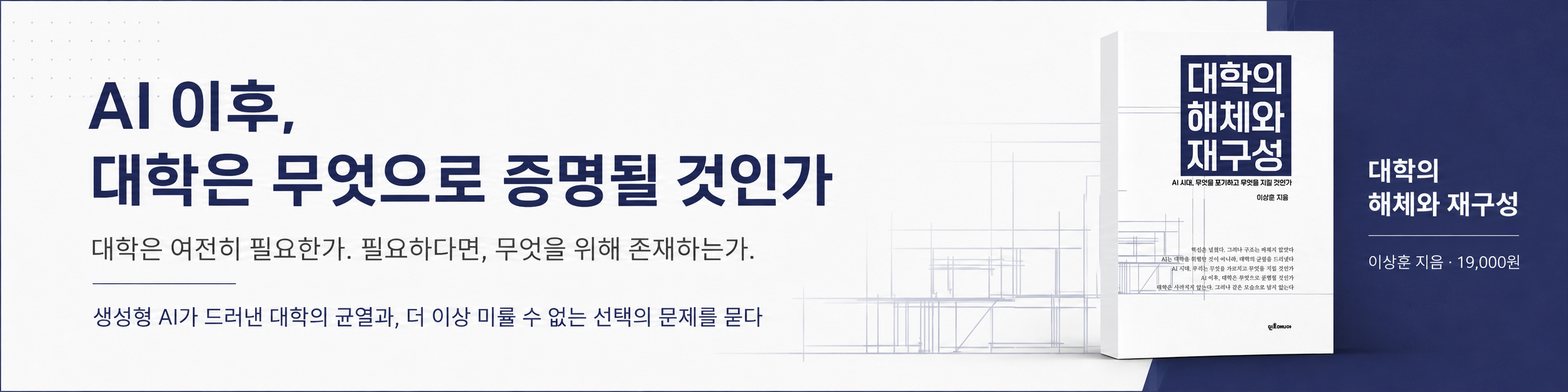
The NHRCK judged that the university’s criteria in this case were also too comprehensive and abstract. While the concept of a “studious atmosphere” can describe a university’s pursued educational environment, it is highly likely to infringe on constitutional fundamental rights when functioning as a criterion for restricting student expression. It was emphasized that blocking expressions that commemorate social tragedies or hate crimes risks turning the university into a “sterile managed space” rather than a space for criticism and reflection. In this case, the NHRCK also drew a clear line against the logic of private university autonomy. It stated that as long as a private university is established under the Higher Education Act and incorporated into the public education system, it is a public institution with an obligation to respect the fundamental rights of its students and members.
Censorship Under the Guise of Prior Approval
The point most strongly challenged in the decision is the structure of “prior approval” for postings. The Constitution explicitly prohibits licensing or censorship of speech and the press. Censorship in this context includes any system where administrative power reviews content before it is made public and blocks its release by selection. The NHRCK’s judgment is that for a university to go beyond managing formats and sizes and instead decide on approval based on whether the content “undermines the studious atmosphere” or is “politically/socially controversial” is essentially no different from censorship. The problem is the chilling effect this prior approval system has on students; they end up giving up on controversial or critical expressions themselves.
Ambiguous Standards: “Subversive” and “Studious Atmosphere”
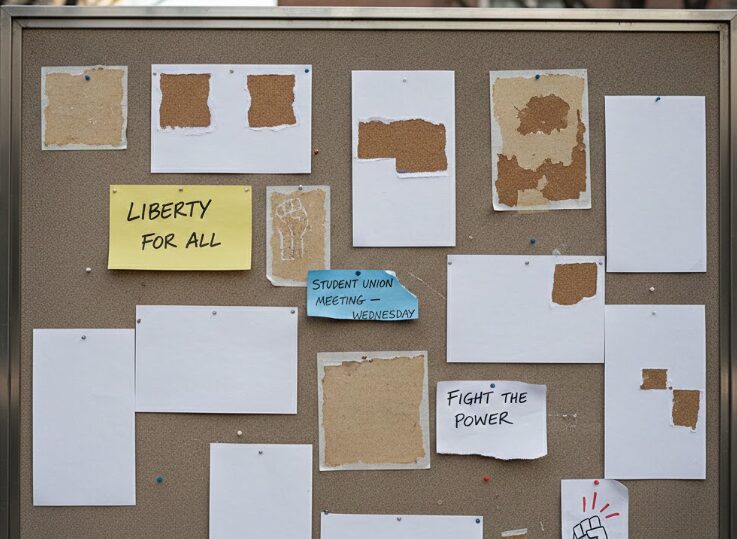
The terms “subversive materials” and “studious atmosphere” appear repeatedly in these cases. Although these terms have long been used in university regulations, their meanings have rarely been clearly defined. The NHRCK pointed out that using such abstract concepts as a basis for restricting fundamental rights is likely to violate the principle of clarity. In a state where it is unknown what is allowed and what is forbidden, freedom of expression naturally withers. Specifically, “subversive” is a concept whose interpretation varies by era and context. Political criticism, social minority issues, gender issues, and challenges to state power can be excluded at any time for being “subversive” or “controversial.” The same applies to a “studious atmosphere.” If a university excludes all social agendas deemed unrelated to learning, the campus risks being reduced to a managed educational facility rather than an academic community.
Minimum Conditions for Universities to Change
The direction for institutional improvement suggested by the NHRCK decision is relatively clear:
- Secure posting spaces where students can freely express opinions without prior approval.
- Refine abstract and comprehensive restriction clauses in school regulations. Terms like “subversive” or “studious atmosphere” should not be used as grounds for restriction unless their scope and criteria are clearly defined.
- Reconstruct management regulations based on the principle of content neutrality. Reasonable regulations on format, location, and duration are possible, but the structure using content as an approval criterion must be removed.
- Establish structures where university human rights centers and student self-governing bodies can substantially participate in the regulation revision process.
#UniversityFreedomOfExpression #PosterRemoval #NHRCK #StudentRights #SchoolRegulations #PriorCensorship #StudiousAtmosphere #UniversityAutonomy #HigherEducationIssues #CampusDemocracy #SpotlightU
![[Analysis] The AI-Driven Labor Market: How Will Universities Respond? – NYU and SUNY’s ‘Experiment of Validation’](https://www.spotlightuniv.com/wp-content/uploads/2026/01/20260118_05-768x411.jpg)

![[OECD Diagnosis of Korean Education 2025 – Questioning the System After Achievement ④]Technology Has Already Changed; The Problem is the University Structure](https://www.spotlightuniv.com/wp-content/uploads/2025/12/20251215_110.png)


