

This post is also available in:
 한국어 (Korean)
Among audiences who have seen the film Materialists, the most frequent reaction is not a sense of being moved or lingering emotion, but rather a sense of incomprehension. Specifically, the direction the protagonist, Lucy, chooses at the end is perceived not as a natural progression of the narrative, but as a decision that abruptly defies the accumulated logic of the film. Leaving Harry, who possesses near-perfect prerequisites, to return to John—with whom she already shares memories of failure—is not easily understood emotionally or narratively. This discomfort is not a mere matter of taste; it is a structural tension that arises when the mode of thinking the film has demanded from the audience is suddenly neutralized at the final moment.
The film does not ask the audience to follow emotions. Instead, it systematically teaches the audience how Lucy has lived, worked, and understood relationships, inviting them to participate in her “calculations.” The film repeatedly presents which choice is more stable, which relationship has a lower probability of failure, and what constitutes a rational judgment. In this process, the audience naturally enters Lucy’s cognitive framework and agrees that choosing Harry is the most logical conclusion. Therefore, the final choice is felt not as an emotional plot twist, but as a moment where the criteria for judgment built together no longer function.
Crucially, the film does not attempt to explain this collapse. Unlike many romance films that declare the superiority of emotion or resolve all inconsistencies with the word “love,” Materialists keeps explanations to a minimum, leaving the audience in a state of anxiety. This anxiety is not a byproduct of an incomplete ending but a residue intentionally left by the film. It does not try to persuade the audience that the limit reached when calculation is pushed to its end, or the choice that transcends that limit, necessarily leads to relief. Instead, it leaves that discomfort itself as the film’s final scene.

Is Lucy a Materialist, or Simply Accustomed to Calculation?
Defining Lucy as a mere “materialist” flattens the nuances of her character. She is not someone who despises love or denies emotion. Rather, she is someone who knows all too well how easily emotions can destabilize a relationship and has chosen calculation as a way to manage that vulnerability. Her profession as a matchmaker is not the cause of her worldview but the institutionalized result of an already formed attitude. Breaking love down into conditions and translating emotions into figures is not a cold-hearted choice for Lucy; it is a practical skill for survival in an uncertain world.
The film shows, without exaggeration, where Lucy’s calculation originates. What she experienced in past romances was not the betrayal of emotion, but repeated instability: situations where anniversary dinners were impossible, states where the future could not be planned, and a structure where today’s intimacy returned as tomorrow’s anxiety. Lucy arrived at one conclusion: emotion is important, but emotion alone cannot sustain a relationship. When she says, “I will never date a poor man again,” it is not a declaration devaluing others, but a boundary line to protect herself.


Harry: The Tension Created by the Perfect Option
Harry is not portrayed as the typical “incarnation of capital” or a “temptation to be rejected.” He is not only perfect in terms of his conditions but is also mature and stable in his attitude. He respects his partner, does not flaunt his wealth, and does not try to dominate the relationship. As someone who satisfies every criterion Lucy presents to her clients, Harry is the exemplary realization of the logic of calculation constructed by the film.
The discomfort for the audience arises because there is no clear reason to leave Harry. By failing to highlight any artificial flaws in him, the film places the audience in a difficult position. Those who have agreed that choosing Harry is rational experience the collapse of the ending they expected. The film leaves the realization that a perfect option is not necessarily the answer—not through explanation, but through experience.
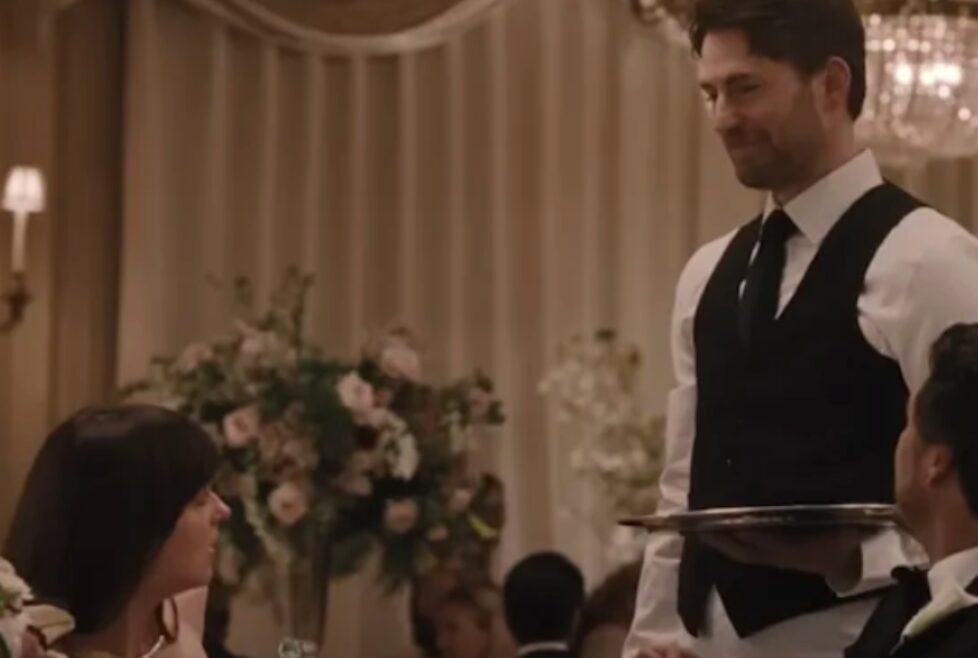
John: Calling Back Anxiety, Not Providing an Alternative
John does not function as a “romantic alternative” to Harry. He is a conditionally inferior option, yet he is not polished into an emotionally superior figure either. He remains economically unstable, his future is murky, and the issues that plagued their past relationship remain unresolved.
What John represents is the density of memory, not potential. He is tied to the accumulation of time that cannot be converted into calculation, the familiarity formed through repeated daily life, and the remnants of emotion that persisted even when conditions collapsed. However, the film does not romantically exaggerate this. The relationship between John and Lucy feels old and familiar rather than warm or heart-fluttering. John is not the “right answer.” By choosing him, the anxiety Lucy’s calculations sought to eliminate returns. This anxiety remains an element that ultimately cannot be excluded from the relationship.
The Turning Point: When Calculation Stops Working
Lucy’s choice is not presented as a dramatic emotional explosion. Instead of tearful confessions, the film opts for a very quiet transition. There is no clear event or decisive trigger. Rather, the narrative centers on a state where calculation no longer works as it did—a moment where the language of judgment is exhausted.
This choice is not the victory of a fantasy where “love solves everything,” but an admission that calculation alone cannot sustain a relationship. Lucy does not reach the conclusion that emotion is superior to calculation; she reaches the limit where calculation no longer protects her. This scene reveals vulnerability rather than hope. Life does not become stable after her choice, and the relationship remains dangerous. The film does not tell the audience to be relieved; it shows exactly what we lose and what we must endure when we let go of calculation.
A Relationship Report in the Shell of a Romcom
Materialists looks like a romantic comedy because it faithfully adopts genre conventions: the urban setting, sophisticated characters, a love triangle, and situational humor. Traditionally, this genre makes the process of choice enjoyable and rewards that choice at the end. However, while following these conventions, the film ultimately denies the emotional reward the genre usually provides.
This misalignment is the core strategy. The audience expects emotional catharsis through the language of a rom-com, but the film leaves a question instead. There is laughter but no relief; there is a choice but no answer. By using the familiarity of the genre as a trap, the film transforms the relationship into an object of analysis. In the end, this work is a relationship analysis report borrowed in the form of a romantic comedy.

Conclusion: Is This Discomfort the Film’s Problem, or Our Reality?
What Materialists leaves behind is not a clear conclusion but an uncomfortable state. It does not present love as salvation, nor calculation as a cold enemy. It simply shows how valid calculation was and where it hits its limit. Lucy’s choice is not a “right” or “wrong” judgment, but a sign that she can no longer hold on in the same way.
The discomfort of this work is closer to the reality of the relationships we live in today. In a world that prioritizes conditions, a choice that steps outside those conditions is bound to be anxious. The film leaves this as a question rather than resolving it: Will we stay within calculation, or will we accept the moment it no longer works? The answer is not in the film; it continues in the lives of each audience member, in their own way.
#Materialists #CelineSong #FilmAnalysis #MovieReview #LoveAndCalculation #ModernDating #DeconstructingRomCom #RelationalAnxiety #LimitsOfChoice #DatingConditions #MarriageDiscourse #EndingExplained #PastLives #SpotlightUniv





Leave a Reply