
This post is also available in:
 한국어 (Korean)
South Korea’s university lifelong education policy has continued without interruption for the past 15 years. Institutional pathways for adult learners to enter universities have been established, and through the College of Lifelong Education and the LiFE projects, these initiatives have successfully integrated into university organizations to some extent. Nevertheless, policies have repeatedly hit the same walls. While adult learners have increased, the “core” of the university has not changed; while lifelong education has expanded, the “system” has not transitioned.
This is precisely why the National Assembly Future Institute (NAFI) chose the expression “transitioning to a lifelong education-centered university system” rather than “expanding lifelong education.” The current issue is not about how to attract more adult learners. It is a much more fundamental question: For which type of learner was the university system designed, and is it ready to change that standard?
In this second installment, we unpack the meaning of “systemic transition” as proposed by the report, focusing on the demand to restructure the existing higher education framework rather than simply employing policy rhetoric.
Why “Transition” Instead of “Expansion”? – A Conclusion Built on Policy Accumulation
A common criticism of university lifelong education policy is that “effectiveness is low compared to performance.” However, NAFI’s analysis offers a different perspective. The report diagnoses that a new direction is needed not because previous policies failed, but because they have accumulated to a point where the old methods can no longer proceed.
The policy experience of the last 15 years clearly shows:
- Demand from adult learners is a structural change, not a temporary phenomenon. As society ages and the proportion of university graduates among the middle-aged and elderly rises, the demand for higher-level re-education will not decrease.
- Universities already possess some institutional capacity to accommodate adult learners. Admission processes, academic management, and curriculum designs exist, albeit in an incomplete state.
The problem is that these two facts have failed to shake the fundamental premise of university operations. Universities are still designed with school-age students as the “default value,” with lifelong education placed on the periphery. The report argues that as long as this structure remains, adult learners cannot move to the center. Therefore, what is needed is not a fine-tuning of the system, but a transition in design principles regarding which learners the university places at its core.
What is a Lifelong Education-Centered University System? – Redesigning Based on Adult Learners
Contrary to common misconceptions, a “lifelong education-centered university system” is not a proposal to turn all universities into adult education centers. It is a blueprint for structural reorganization based on functional differentiation among universities.
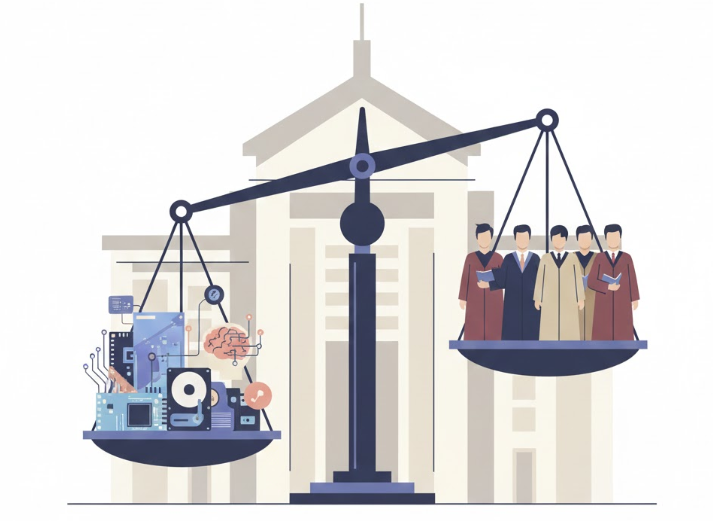
The study suggests that it is no longer sustainable for all universities to play the same role. A lifelong education-centered system involves differentiating universities into:
- Research and education institutions centered on school-age students.
- Higher lifelong vocational education institutions centered on adult learners.
For non-capital region universities, the premise is that it is realistically impossible to maintain the same strategy as Seoul-based universities in the competition to recruit school-age students. The report recognizes that these universities must be redesigned to function as hubs for higher lifelong vocational education that connects adult learners with local industries and communities.
This transition is not just about increasing night classes. It demands that curriculum design standards, the rhythm of academic operations, the definition of faculty roles, and financial allocation structures all be reset based on adult learners. In other words, lifelong education should no longer be an “additional function” but the core function for specific types of universities.
Three Walls: Finance, Faculty System, and Governance
① The Financial Wall: Systemic Change is Impossible with Short-term Projects
The first reason the NAFI proposal hits a wall is the financial structure. Most university lifelong education policies have been implemented as time-limited financial support projects (LiFE, etc.). While these allowed for institutional experiments, they were rarely designed for sustainable operation after the funding ended. This forces universities to focus on annual evaluations and performance indicators rather than long-term systemic transition.
② The Faculty Wall: Who Will Teach, and by What Standards?
Adult learners have fundamentally different goals and experiences than school-age students. They require problem-solving and immediate applicability, which does not easily mesh with existing theory-centric, research-linked education. However, faculty evaluation and promotion systems are still centered on research achievements. Education for adult learners is often perceived as a burdensome activity that does not contribute to one’s research track record.
③ The Governance Wall: Who Decides and Takes Responsibility?
Systemic transition requires a strategic choice by the entire university. However, lifelong education has rarely been a central agenda item in the top decision-making structures of universities. While dedicated departments exist, they are often not in a position to influence mid-to-long-term development plans or financial strategies.

Policy Pathways: Financial Linkage and the RISE System
NAFI suggests three key policy pathways to overcome these walls:
- Redesigning the Finance Structure: Providing institutional flexibility so that Local Education Grant (currently limited to primary and secondary education) can be used for higher and lifelong education in regions.
- Linking with Employment Insurance Funds: Organically connecting university vocational education with employment insurance funds, which are intended for job competency development and employment stability.
- Integrating with the RISE System: Using the Regional Innovation System & Education (RISE) framework as an institutional foundation. If lifelong education is institutionalized as part of a regional strategy rather than an individual university’s choice, it can be integrated with local industrial and employment policies.
To Maintain or To Transition?
The message from the National Assembly Future Institute is clear: university lifelong education policy is no longer at the stage of discussing “whether to expand.” The problem is now a matter of choice: Around which learner will the university design itself?
The method of appending adult learners to the existing undergraduate system has reached its limit. This structural boundary is not a failure of policy, but a result of its accumulation. Systemic transition is not a declaration to force a new role on universities; it is the presentation of choices based on reality.
Some universities will maintain their focus on school-age students and research, while others must transition into hubs for higher lifelong vocational education centered on adult learners and local industries. This differentiation is what will increase the sustainability of the higher education system as a whole.
The future of the university will not be decided by policy alone. The entity that must now decide is the university itself.
#LifelongEducationUniversity #SystemicTransition #AdultLearner #RegionalUniversityInnovation #VocationalEducation #RISE #HigherEducationFinance #DemographicChange #FutureOfUniversity #SpotlightU



Leave a Reply