

![[Analysis] The AI-Driven Labor Market: How Will Universities Respond? – NYU and SUNY’s ‘Experiment of Validation’](https://www.spotlightuniv.com/wp-content/uploads/2026/01/20260118_05-300x161.jpg)
![[Review] Netflix’s “Can This Love Be Translated?”: The Most Beautiful Way to Correct the Heart’s Mistranslation](https://www.spotlightuniv.com/wp-content/uploads/2026/01/20260118_03-300x207.jpg)
![[Review] Materialists: A Relationship Analysis Report Disguised as a Romantic Comedy](https://www.spotlightuniv.com/wp-content/uploads/2026/01/20260115_17-300x196.jpg)

This post is also available in:
 한국어 (Korean)
Looking Beyond Numbers: ‘Format’ as the Priority
The total budget that the central government and local governments have pledged to invest in startup support for the year 2026 amounts to 3.4645 trillion won. This involves 111 participating organizations and 508 individual projects. For a single year, this is a significant scale, representing a 5.2% increase from the previous year.
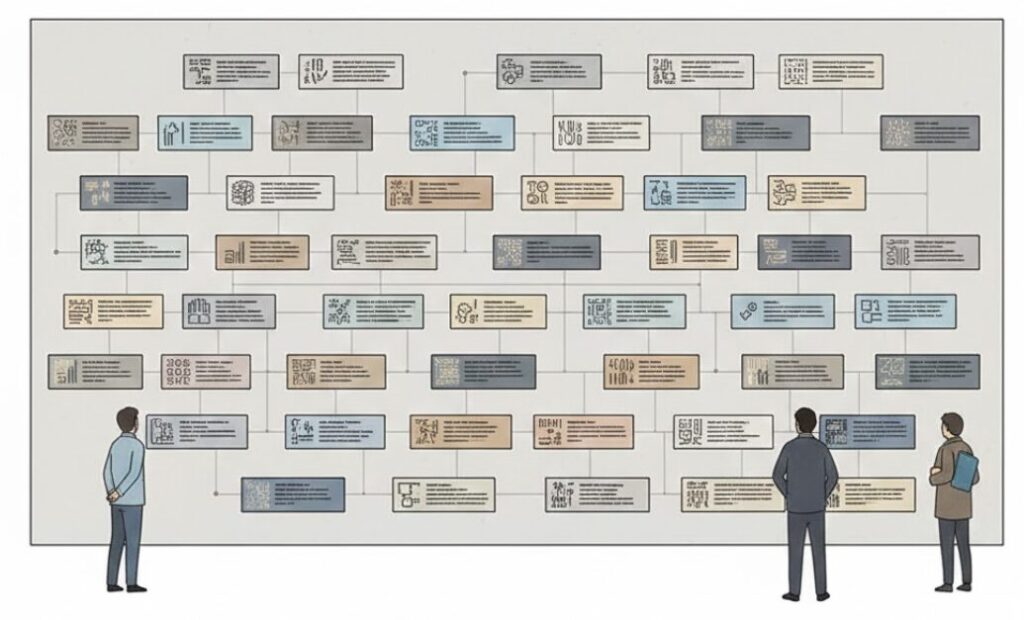
However, to understand the core of this announcement as merely “how much is being spent” would be to miss the true policy message. At the heart of this announcement lies the format of “integration”—the government’s approach to organizing and managing startup policy. The 「2026 Integrated Announcement of Startup Support Projects by Central Ministries and Local Governments」 compiles startup support programs, which were previously announced separately by various ministries and local governments, into a single list. Based on Article 14 of the Small and Medium Business Startup Support Act, the goal is to make policy information more accessible to pre-startups and entrepreneurs.
The number of participating institutions includes 15 central ministries and 96 local governments. While the scale is expanding, a closer look reveals that this is more of an informational integration rather than a strategic one. While the announcement allows for a birds-eye view of various projects, the design, goals, and evaluation criteria of each project remain decentralized within individual ministries and local governments. This suggests that while startup policy has expanded into a pan-governmental domain, cross-policy coordination and unified direction-setting remain limited.
What the Budget Structure Says About the Definition of ‘Startups’
The allocation of the budget by type reveals how the government currently defines startup activities. Loans and guarantees account for the largest share at 1.4245 trillion won (41.1%), followed by Research & Development (R&D) at 864.8 billion won (25.0%), and commercialization support at 815.1 billion won (23.5%).
These three types account for 89.6% of the total budget. In contrast, categories such as mentoring, consulting, education, networking events, and personnel support each stay around or below 1%. This confirms that despite the rhetoric of a “startup ecosystem,” actual policy design treats startups primarily as objects of financial and technical management.

Furthermore, the concentration of the budget is stark: the Ministry of SMEs and Startups (MSS) accounts for 93.9% of the central government’s portion. Regionally, budgets are heavily concentrated in Seoul, Gyeonggi, and South Gyeongsang Province. While many actors participate, the central axis of policy remains fixed on a specific ministry and large-scale financial projects.
A Shift in Management: Flexibility vs. Control
A distinct change in this announcement is the shift in project management rather than just the budget size. The government has revised the Management Guidelines for Startup Support Projects to increase flexibility in fund execution. For instance:
- Outsourcing costs can now be paid in installments.
- Maintenance costs for intellectual property rights filed prior to the project start are now eligible for support.
Simultaneously, control over misconduct has been tightened. The restriction period for participating in projects through fraudulent means has been extended from 3 years to 5 years, and follow-up management for equipment built with government support has been strengthened. This structure presents increased flexibility in support and increased intensity in control at the same time.
Conclusion: The Current Meaning of ‘Startup Ecosystem’
The government explains that this integrated announcement will make information more accessible and support more efficient. While administrative convenience has indeed improved, it remains a question whether the organic connection and stepwise growth structure implied by the term “startup ecosystem” are actually implemented in the policy design.
The startup policy revealed in this announcement looks less like “expanded support” and more like “aligned management.” Presenting hundreds of projects and trillions of won under a single framework shows that startup policy has moved beyond the issue of scale into the issue of governance. This announcement serves as a coordinate indicating that the primary policy task is no longer just how to grow startups, but how to operate and control a policy framework that has already grown significantly.
#StartupPolicy #StartupSupport #MinistryOfSMEsAndStartups #PolicyAnalysis #StartupEcosystem #GovernmentPolicy #SpotlightU
![[Analysis] The AI-Driven Labor Market: How Will Universities Respond? – NYU and SUNY’s ‘Experiment of Validation’](https://www.spotlightuniv.com/wp-content/uploads/2026/01/20260118_05-768x411.jpg)