


![[Analysis] The AI-Driven Labor Market: How Will Universities Respond? – NYU and SUNY’s ‘Experiment of Validation’](https://www.spotlightuniv.com/wp-content/uploads/2026/01/20260118_05-300x161.jpg)
![[Review] Netflix’s “Can This Love Be Translated?”: The Most Beautiful Way to Correct the Heart’s Mistranslation](https://www.spotlightuniv.com/wp-content/uploads/2026/01/20260118_03-300x207.jpg)
![[Review] Materialists: A Relationship Analysis Report Disguised as a Romantic Comedy](https://www.spotlightuniv.com/wp-content/uploads/2026/01/20260115_17-300x196.jpg)
This post is also available in:
 한국어 (Korean)
How AI and Digital Transformation Are Shaking the Governance of Korean Higher Education
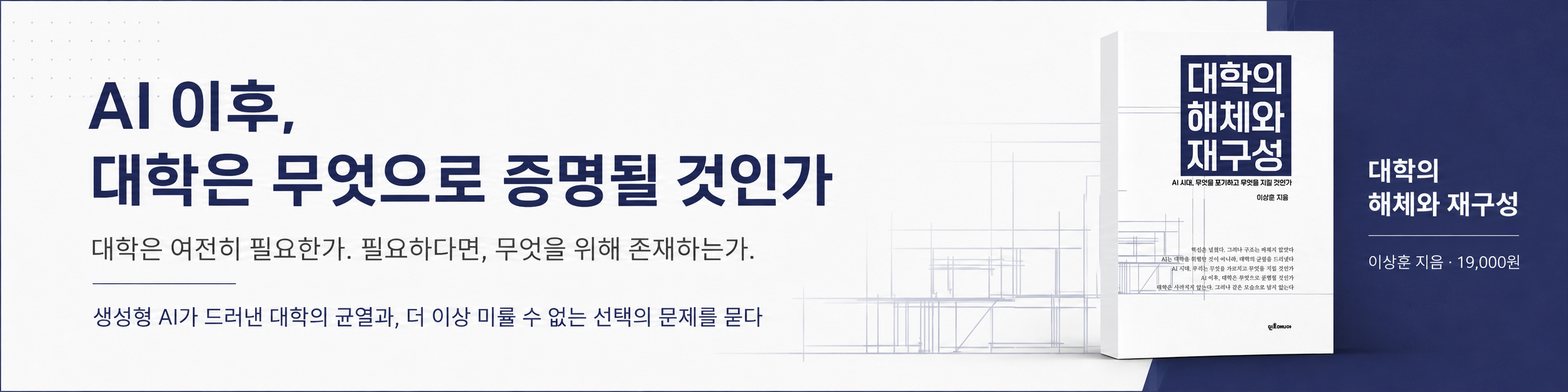
When discussing the future of universities, AI and digital transformation are no longer in the realm of prediction. Online classes, Learning Management Systems (LMS), and automated administrative tools have already become part of campus life. However, it is difficult to say that the influx of technology has led to a fundamental transformation of the university. While teaching methods have partially shifted, the underlying structures—semester systems, credit systems, faculty evaluation standards, and financial allocation—remain stuck in the past. Digital transformation has changed the surface of the university, but it has failed to reach the core architecture that sustains it.
The question is clear: The issue with Korean higher education is not whether AI has been introduced, but whether we believe the existing structure can be maintained even after AI has arrived. Technology has started the change, but university governance and institutions are failing to absorb it, creating growing tension.
Beyond Knowledge Supply: Redefining the Role of the University
Discussions on AI often stay on the surface—such as whether to allow AI in assignments. But AI shakes the very assumptions of university education. Traditionally, universities functioned on the premise of “knowledge scarcity.” Professors were the primary suppliers, and universities were privileged spaces. AI collapses this. Information access is no longer the exclusive domain of the university. This asks a fundamental question: Universities must move from providing information to fostering the ability to interpret, judge, and apply it. AI does not replace the university; it clarifies what the university must do.
Institutional Inertia vs. Technological Speed
The speed of technological change and institutional speed are severely mismatched. While hybrid learning has spread, systems remain designed for offline lectures. Credits are still calculated based on seat time, and achievement is measured by traditional exams. This rigidity becomes a risk factor in an AI-driven environment. Digital transformation in universities is not about upgrading systems; it is a matter of governance—who decides the direction of education and by what standards success is judged. Current centralized, regulation-heavy governance limits the experimentation and differentiation required in the AI era.
AI Does Not Arrive at the Same Speed for Everyone: The Digital Divide
Technology itself might be accessible, but the capacity to integrate it into education and administration varies greatly across institutions. Infrastructure, finance, and organizational culture create a “digital gap” that amplifies existing university hierarchies.
- Metropolitan & Large Universities: They possess the financial and human resources to use digital transformation as a strategic tool for data-driven decision-making and new learning pathways.
- Regional & Small-scale Universities: For them, digital transformation is often a double burden. They lack the resources to maintain existing operations while simultaneously pursuing digital shifts. Furthermore, online education may inadvertently expand the influence of metropolitan universities, threatening the stability of regional institutions.
Digital transformation does not automatically reduce gaps; its effect depends on policy design. We need a “differentiation of roles” where regional universities adopt digital strategies suited for local learners and lifelong education, rather than blindly following the model of research-oriented elite universities.
Ethics and Responsibility: A Matter of Institutional Design
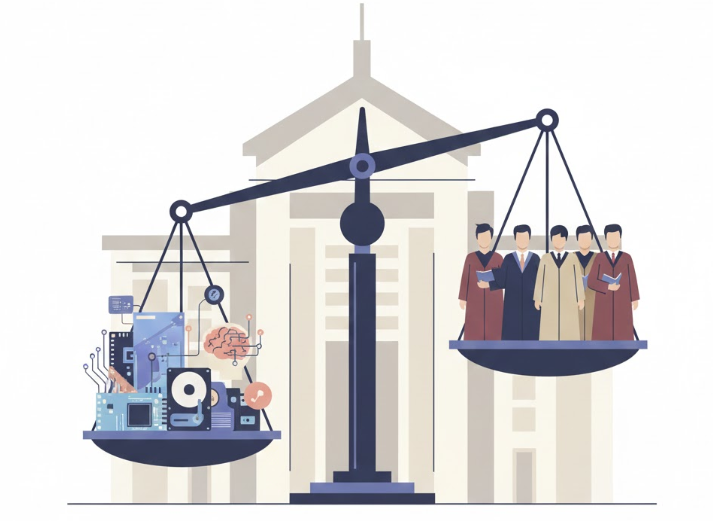
The ethical issues surrounding AI—plagiarism, fairness in evaluation, and data privacy—cannot be solved by mere prohibition. Ethics is about the distribution of roles and responsibilities. If universities want to maintain “student agency” while allowing AI, clear standards are needed for what remains the student’s responsibility and what falls under the institution’s oversight. Fair evaluation in the AI era requires a shift from “result-oriented” to “process-oriented” assessment, which is only possible when administrative and academic systems are redesigned accordingly.
Conclusion: Future Won’t Come Without Structural Change
Throughout this series, we have asked whether the current structure of Korean higher education can move to the next stage. AI and digital transformation do not guarantee the future; they merely make change unavoidable. If the governance, evaluation standards, and financial structures remain unchanged, technology will only reinforce existing inequalities.
The choice for Korean higher education is stark: remain a university that merely adopts technology, or move toward a university that redesigns its structure. This choice will determine the path of our youth and the sustainability of our society.
#AIandEducation #HigherEducation #DigitalTransformation #UniversityGovernance #UniversityReform #EducationPolicy #FutureOfUniversity #SpotlightU
![[ Conditions of AI Competition ③ ] Does South Korea’s AI Strategy Include Universities?: Where Talent, Universities, and National Strategy Diverge](https://www.spotlightuniv.com/wp-content/uploads/2025/12/20251216_118.png)
![[ Conditions for AI Competition ② ] Universities Are Not at the Center of the AI Era: The World Bank Report Reveals the Structural Crisis of Higher Education](https://www.spotlightuniv.com/wp-content/uploads/2025/12/20251216_117.jpg)
![[ Conditions of AI Competition ① ] The Essence of AI Competition is Not the Model, But Fundamental Strength](https://www.spotlightuniv.com/wp-content/uploads/2025/12/20251216_116.jpg)