

![[Analysis] The AI-Driven Labor Market: How Will Universities Respond? – NYU and SUNY’s ‘Experiment of Validation’](https://www.spotlightuniv.com/wp-content/uploads/2026/01/20260118_05-300x161.jpg)
![[Review] Netflix’s “Can This Love Be Translated?”: The Most Beautiful Way to Correct the Heart’s Mistranslation](https://www.spotlightuniv.com/wp-content/uploads/2026/01/20260118_03-300x207.jpg)
![[Review] Materialists: A Relationship Analysis Report Disguised as a Romantic Comedy](https://www.spotlightuniv.com/wp-content/uploads/2026/01/20260115_17-300x196.jpg)
This post is also available in:
 한국어 (Korean)
Answering “Where Did This Fish Come From?”: First in Korea to Obtain Full-Chain GDST International Certification
It remains a challenge to verify exactly where seafood was caught and what processes it underwent before reaching the dinner table. In the complex supply chain connecting production, processing, distribution, and sales, information is easily fragmented, and standards vary by country. To address these limitations, KAIST researchers have presented a digital solution based on international standards, gaining official recognition for their technical prowess in the global market.
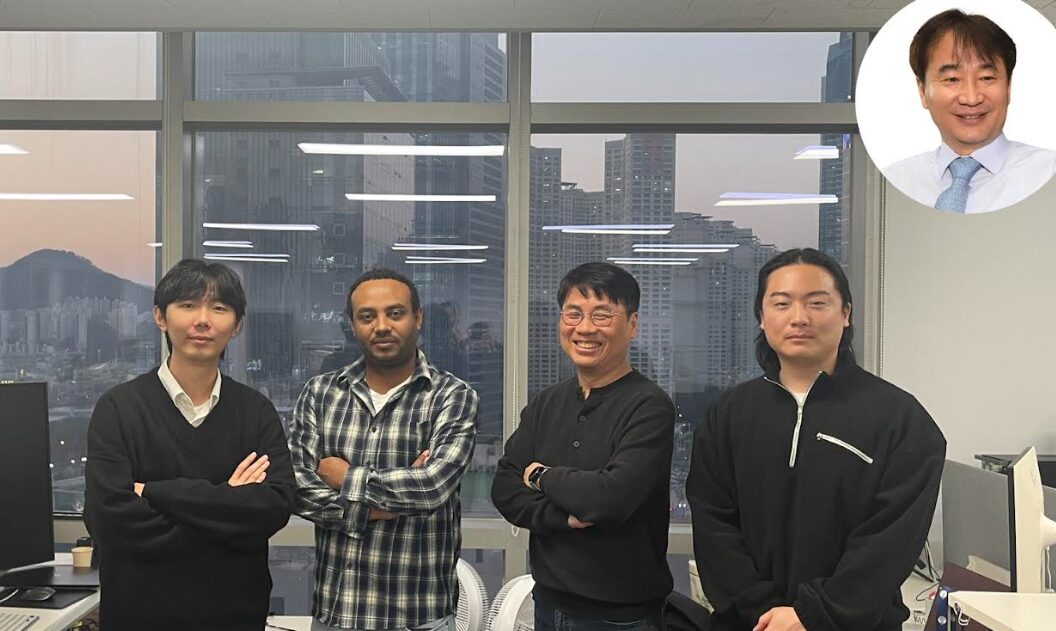
KAIST announced that ‘OLIOPASS,’ a digital seafood traceability solution developed by Director Kim Dae-young of the Auto-ID Labs Busan Innovation Research Institute, has passed the performance verification of the Global Dialogue on Seafood Traceability (GDST) and obtained the ‘GDST Capable Solution’ certification. This is a first for South Korea.
Worldwide, only 13 technologies have received GDST certification. Among them, only seven solutions, including KAIST’s, support ‘Full-Chain’ traceability—managing the entire process from production to sales. This certification is considered technically demanding as it covers the entire supply chain rather than a single process. GDST is an international coalition established in 2015 at the suggestion of the World Economic Forum (WEF). It defines core data and tracking events that must be recorded throughout the seafood supply chain according to GS1 international standards. Its goal is to build an interoperable global traceability system that transcends borders and corporations. Recently, major food distributors in the US and Europe have begun requiring compliance with GDST standards, making it a de facto essential requirement for entering global markets.
A “Common Language” for Global Logistics: From IoT to AI-Ready Infrastructure
KAIST has played a key role as a founding member of GDST since 2019, designing information linkage between seafood traceability models and systems. This certification is the fruit of such international cooperation and signifies that domestic technology has been officially incorporated into the global standard system.
OLIOPASS is a digital traceability platform that combines KAIST’s IoT technology with the latest international standards, such as GS1 EPCIS 2.0 and GS1 Digital Link. It records and shares movement information related to seafood as standardized data and utilizes blockchain technology to prevent data falsification. It is designed so that even if companies use different internal systems, traceability data can be linked through a single “common language.”

Notably, this platform is built as an ‘AI-ready data infrastructure’ intended for AI utilization. It can easily integrate next-generation AI technologies—such as Large Multimodal Models (LMMs), AI agents, and Knowledge Graphs—making it a foundational technology that supports simultaneous digital and AI transformation beyond simple history management.
Responding to Global Regulations: FDA FSMA 204 Readiness
This certification is also highly significant regarding regulatory compliance. The U.S. Food and Drug Administration (FDA) is set to enforce the Food Safety Modernization Act (FSMA 204) starting in July 2028. This regulation mandates precise traceability and rapid data submission for high-risk foods. KAIST’s technology is evaluated as providing a practical solution for domestic companies to navigate these changing international regulatory environments.
Director Kim Dae-young explained that this achievement is a case of international recognition for reliable data technology capabilities across global supply chains. He revealed plans to expand the technology beyond seafood to various sectors, including food, pharmaceuticals, logistics, defense, and smart cities, ensuring KAIST’s digital standard technology is utilized globally.
KAIST’s latest success is noteworthy for providing a technical solution to broader challenges, such as global supply chain transparency and the establishment of digital trust infrastructure. It demonstrates that data technology that secures a lead in international standards will likely function as a core element of global market competitiveness in the future.
#KAIST #SeafoodTraceability #GDST #GlobalSupplyChain #DigitalTransformation #OleoPass #GS1Standards #AIData #BlockchainTraceability #FoodSafety #DigitalProductPassport