
This post is also available in:
 한국어 (Korean)
A Journey of Growth Created by Close Faculty Mentorship, Institutional Support, and Student Challenge
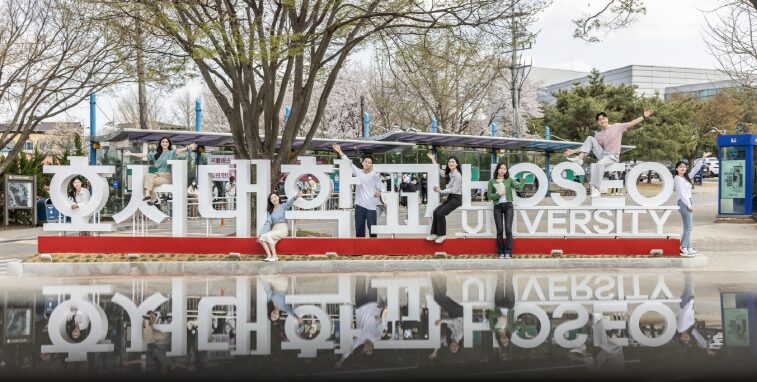
Readers of university admissions special articles often first think of information such as recruitment quotas by track, competition rates, and minimum CSAT (Suneung) requirements. However, the story of Hoseo University (HU) is different. The core emphasis of this university is not simply the procedure for selecting students, but the transformation students undergo during their four years and the competencies they possess upon graduation. In other words, the message HU conveys to applicants and parents is that “admission” is not the end, but the beginning of “growth.”
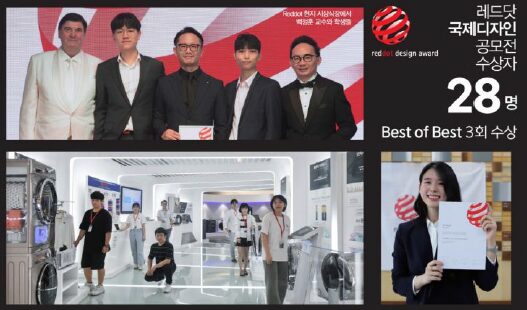
Celebrating its 47th anniversary, Hoseo University envisions itself as a “world-class university leading with a venture spirit.” This is not just a slogan; actual achievements prove it. Among 76 first-year students in the Department of Animation, 62 students produced 65 emoticons that were officially registered on the Naver LINE Store. Students at the School of Design have consecutively won the world’s top three international design awards: Red Dot, iF, and IDEA. Engineering students have secured grand prizes in Capstone Design and AI Hackathons, while graduate students have received Excellence Poster Awards for AI-based alternative toxicity research. As these cases accumulate, the perception that “four years at Hoseo is a journey of student growth” has become firmly established.
Hoseo’s Educational Philosophy: A Growth-Oriented University
Hoseo University’s educational philosophy is simple and clear: a university is not a space for injecting knowledge, but a stage for discovering a student’s potential and turning it into reality. This philosophy is consistently embedded in the various academic systems, programs, and faculty mentorship styles developed by HU.
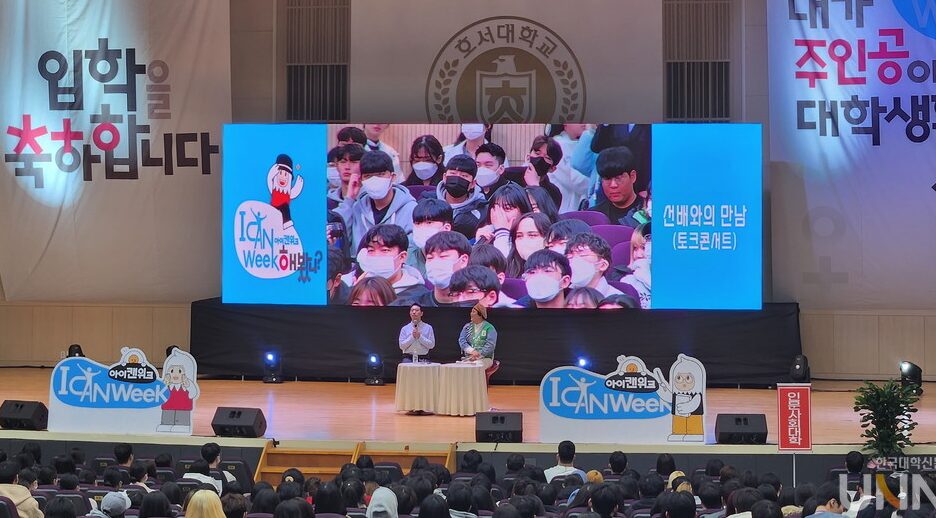
A representative example is the “ICAN+ Semester System.” This system is a growth platform that helps students contemplate their vision and career path from the very beginning of their enrollment. Unlike typical university orientations that merely introduce campus life, Hoseo’s ICAN Week is designed as a starting point for self-exploration. During the first week of the semester, approximately 300 student mentors guide freshmen directly. Seniors pass on class know-how and club experiences, while professors and staff reduce the initial anxiety students might feel. Combined with talk concerts featuring alumni, major exploration workshops, club booth experiences, and “Shorts” video production challenges, freshmen move beyond the fact that they “entered university” and start asking, “What can I do at university?”
The effect of the ICAN+ Semester System extends beyond the first week. Throughout the semester, Hoseo helps students check the vision they established and modify it if necessary. For instance, in the second year, students test their career paths through project-based classes linked to their majors. From the third year, they gain real-world experience through Capstone Design or industry-academic cooperation programs. The final year is structured stepwise—including employment/startup prep, national exam classes, and Metaverse-based virtual internships—to ensure students are ready for society. This “life-cycle learning design” is the core of the ICAN+ model.
Another pillar is the Learning Community system. Hoseo believes students should not be passive listeners but active subjects who learn and teach each other. “RE:born,” a representative community, allows seniors and juniors to form teams to share knowledge and academic strategies. “THINK+” transcends major boundaries to enable diverse teamwork, producing tangible results such as app development, paper publications, patent applications, and startup ideas. There are continuous cases of THINK+ teams winning national competitions or registering patents. Additionally, the “Jump-Up Learning Community” provides mentoring for transfer, returning, and department-changing students, ensuring they feel a sense of belonging while continuing their studies.
Hoseo’s educational philosophy can be summarized by three pillars: “Meticulous Faculty Mentorship + Proactive Student Participation + Institutional Support.” Professors provide direction, students take on challenges, and academic systems, scholarships, and learning communities support the process.
Student Growth Stories: From Classroom to Achievement
The strength of Hoseo University lies in its system that helps students connect classroom learning to actual performance. When a student’s passion meets meticulous faculty guidance and institutional backing, a drama of growth is created.
Notable achievements are most prominent in the field of design. Established in 1978, the School of Design now operates as an integrated school covering Visual, Indoor, Industrial, and Digital Product Design. Students expand their creativity through practice based on “the transformation of thought.” Consequently, they have proven their international competitiveness by winning numerous awards at the Red Dot, iF, and IDEA awards over the past five years. These achievements were possible thanks to close feedback from faculty and collaboration with industry professionals.
The Department of Animation also stands out. In 2025, 62 out of 76 freshmen registered 65 emoticons on the Naver LINE Store. Since LINE has strict criteria for copyright and quality, it is rare for such a large group of first-year students to enter a commercial platform collectively. This was possible through HU’s “End Product” centered modular curriculum, where students experienced the entire process from character planning to commercialization in their “Digital Imaging” class.
Research performance is another indicator. Graduate researcher Ryu San-deul won the Excellence Poster Presentation Award at the Korean Society for Alternatives to Animal Experiments for her “AI-based alternative toxicity research.” Using deep learning to replace animal testing, this study garnered attention for improving evaluation accuracy in lung fibrosis models.
Engineering students have also proven their skills. In the 2024 Capstone Design & AI Hackathon, HU teams won the Grand Prize in the Generative AI category and the Excellence Award in Algorithm Utilization. Projects solving social issues, such as an “AI Helper for Multicultural Families” and an “AI Fairytale Platform for Children with Language Disorders,” received high marks.
Faculty Philosophy: Students as Partners
Behind every student achievement is the meticulous attention and passionate guidance of the faculty. Professors at Hoseo do not see students as passive objects; they view them as “partners growing together.”
- Lee Dan-bi, Director of the Brand Design Center, guides students not to end their work as mere assignments but to enter international awards or corporate projects, fostering “designers that the industry seeks.”
- Prof. Jeong Dong-cheol (Semiconductor Engineering) established the Semiconductor Packaging Lab to train practical personnel for the regional industry. By having students wear dustproof suits and handle packaging equipment in cleanrooms, he provides an environment identical to the actual field.
- Seon Bok-geun, Director of the AI/SW-Centered University Project, emphasizes project-based practice and industry mentoring, helping students develop the ability to “solve social problems using AI.”
Even in research and startups, professors respect failure as part of the learning process. This companion-like relationship is the greatest strength making Hoseo a differentiated, future-oriented university.
Institutional Support: Scholarships, ICAN+, and Communities
Hoseo’s institutional support acts as a “safety device for growth.”
- Scholarships: HU pays an average of 3.7 million KRW in scholarships per student annually, ranking among the top private universities nationwide. The CANDO Mileage scholarship is particularly unique, awarding points (and eventually money) for achievements like startups, certifications, and contest wins, encouraging students to expand their experiences.
- ICAN+ & Learning Communities: As mentioned, these systems provide a roadmap from admission to graduation, ensuring that “learning outcomes connect with society.”
Global & AI Convergence Education: Preparing Future Talent
Global sense and AI/SW competencies are essential in the era of the 4th Industrial Revolution.
- Global Reach: Hoseo has exchange agreements with 248 institutions in 36 countries, with 1,300 students participating annually. This is not just language study but “major-linked global learning.”
- AIT School (AI & IT School): Launching in 2026, this fusion platform connects Information Communication, Computer Engineering, Intelligent Robotics, and Electronics. Supported by the government’s SW-Centered University project with a budget of 11 billion KRW, it aims to produce practical AI/IT experts through project-based learning and 1:8 customized tutoring.
Industry-Academic Cooperation & Startups: An Innovation Hub
Hoseo has long integrated education with entrepreneurship under its “Venture First” philosophy.
- Success Cases: G&T (GNT), which started in Hoseo’s Business Incubation Center, grew into a semiconductor equipment specialist and signed a 460 billion KRW export contract recently.
- PEAK+ Platform: This platform supports student startup clubs from the ideation stage to investment. In 2024, HU teams won top prizes at the Chungnam University Startup Competition for items like microalgae-based fertilizer and smart song recommendation systems.
- National Network: HU has built a nationwide startup network with 12 universities, including Seoul National University and POSTECH, to bridge the gap between metropolitan and regional startup infrastructures.

Vision: Jumping to a Central Region Hub University
Hoseo is currently executing multiple major national projects, including Semiconductor Specialized University, SW-Centered University, and Entrepreneurship-Centered University. In July 2025, HU joined the RISE (Regional Innovation System & Education) agreement led by Chungnam Province. President Kang Il-gu declared, “Hoseo will establish a sustainable win-win model as a leading innovation university representing Chungnam.”
2026 Early Admissions Guide: Opening the Gateway
The 2026 Early Admissions process is the starting point of this growth journey.
- Scale: 2,589 students (Total 2,881) will be recruited.
- No CSAT Minimum: No minimum CSAT score is required for any track, focusing instead on potential and challenge.
- Tracks:
- Academic (Grades-based): 1,264 students, 100% grades (top 15 subjects).
- Interview-based: 60% grades + 40% interview (questions disclosed in advance).
- Hoseo Talent (Comprehensive): 100% document evaluation (No interview).
- Practical (Arts/Sports): 80-90% weight on practical tests.
- New Opportunities: The newly established AIT School and an expanded Free Major Division (30 seats) provide more flexibility for students to find their paths.
Conclusion: Four Years at Hoseo is a Time for Growth
Today’s applicants ask, “How much can I grow at this university?” Hoseo University provides a clear answer through its results. From international awards to commercialized content and cutting-edge research, HU proves its value through the transformation of its students.
HU does not judge students by their entry scores; it proves itself by the growth they show upon graduation. For students, it is a space to discover potential; for parents, it is a university where their children emerge as “shining talents.” Hoseo University has prepared the most certain answer to the question of growth.
SpotlightU Admissions Special Coverage Team: Jang Geun-seo, Kim Seok-cheol, Eom Ki-hyun
#HoseoUniversity #2026Admissions #VentureFirst #StudentGrowth #SemiconductorPackaging #AITSchool #SWUniversity #AIHackathon #DesignAward #AnimationCommercialization #AIResearch #StartupFirst #RISEProject #PresidentKangIlgu


Leave a Reply