
This post is also available in:
 한국어 (Korean)
2026: Industry and the World are Being Reconfigured Amidst a Void of Order
The key word defining the global industrial environment in 2026 is Reconfiguration. The world has yet to fully digest the economic shocks following the pandemic, losing clear order as technological competition, geopolitical conflict, trade barriers, and the climate crisis converge. The Economist‘s “Ten Trends to Watch in 2026” characterizes the situation facing the world this year as “the weakening of the rules-based order and the proliferation of transactional relationships,” analyzing that the structure of global cooperation, once taken for granted, is rapidly eroding. This signifies that the decades-long structural foundation where industry, economics, and technology developed around national alliances is now shaking.
In particular, the report points out that the return of the Trump administration has made the international economic order the epicenter of uncertainty. The United States has reinforced a policy centered on transactional interests rather than traditional diplomacy, Europe is under internal pressure due to defense and fiscal issues, and China is responding by expanding solidarity with the Global South to build new influence. These complex currents are forcing a redraw of global industrial supply chains, pressuring each nation to adopt different production and trade strategies. Ultimately, industry has transformed from a matter of technological competition into one of political choice and strategic repositioning.
This situation directly impacts Korean industries. Strategic sectors like semiconductors, batteries, and energy are moving within the balance of power between nations, not merely through market competition, and corporate investment, production, and cooperation strategies can change abruptly depending on the political environment. Universities and research institutions are also situated in an environment where international joint research and student networks are swayed by geopolitical shifts. In an era where the world accepts ‘uncertainty’ as the standard condition, Korean society must redesign its strategy across industry, technology, and education.
Supply Chain Reconfiguration — Where is the Future of Cross-Border Trade Heading?
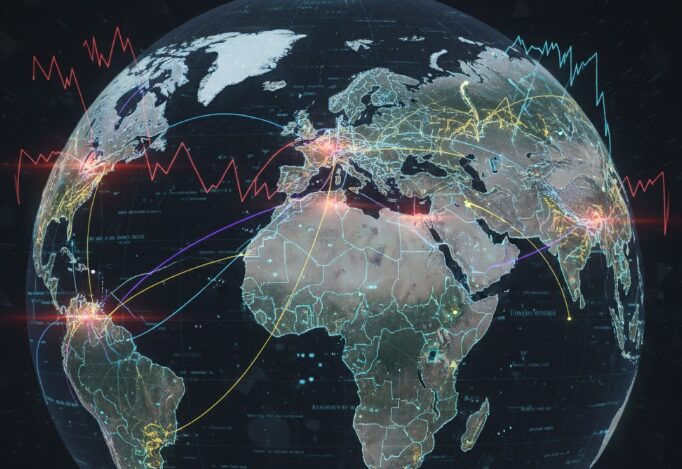
Another decisive factor changing the global economy is the grand transformation of supply chains. While the post-pandemic supply chain shock was initially seen as a temporary incident, by 2026, the supply chain change has become the “new standard.” With the US strengthening tariffs and import regulations, Europe introducing carbon regulations, China protecting its strategic industries, and India pursuing production base expansion, global companies can no longer view the ‘entire world as a single market.’
This trend is clearly demonstrated in an analysis by PwC Korea’s Global Trade Solution Center. The report forecasts that after 2026, companies will focus not just on cost reduction, but on designing supply chains that minimize political risk, expanding region-based production, and complying with eco-friendly regulations. This signifies a departure from the previous supply chain paradigm centered on ‘efficiency,’ with ‘stability, sustainability, and resilience’ becoming the core of corporate strategy. Companies are moving toward building multi-line supply systems that can operate even amidst a crisis, rather than simply trying to avoid one.
These supply chain changes have a significant impact on Korean industries. Key Korean export items—semiconductors, automobiles, batteries, precision machinery, and displays—are deeply integrated into global value chains, and changes in relations with specific countries immediately cause industrial fluctuations. For example, the semiconductor industry is symbolic of the US-China technological hegemony competition and a field both countries strategically seek to control. This means Korean companies must acquire new competitiveness, including not only technological innovation but also political balance, flexible regional strategies, and partner diversification.
Furthermore, the rise of the Global South (Southeast Asia, India, Middle East, Africa) is a critical factor accelerating supply chain changes. These nations are emerging as alternatives to the existing advanced-economy-centric structure, serving not only as low-cost production bases but also as new consumer markets and technology development partners. The world is no longer centered on the G2 (US-China); Korea must possess strategic flexibility to utilize diverse options in this multipolarized market.
The AI Infrastructure Investment Frenzy — Innovation or a New Bubble?
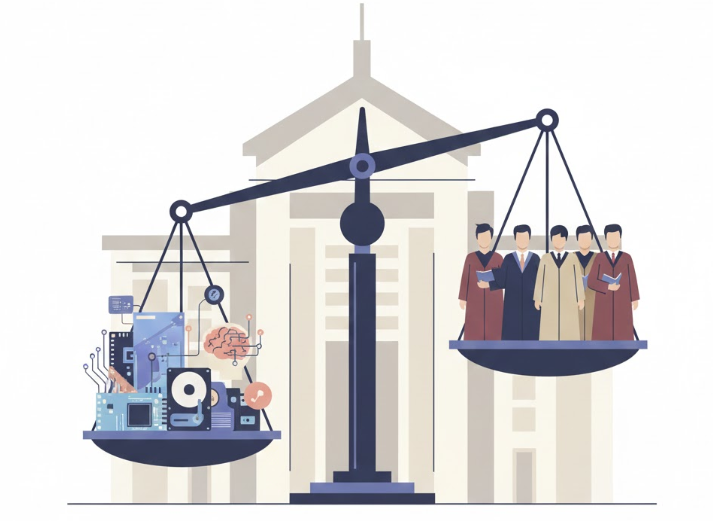
The inescapable variable in the 2026 economic forecast is the overheated investment in AI infrastructure. The explosive spread of generative AI over the last 2-3 years has simultaneously stimulated corporations, governments, and investment markets, resulting in AI infrastructure investment growing faster than any other industry. Data center construction, GPU acquisition, power infrastructure expansion, and large-scale platform building for model training are occurring simultaneously worldwide. However, The Economist issues a cautious warning about this trend. In its 2026 outlook, the report analyzes, “While AI infrastructure investment supports some of the US economy’s resilience, there are questions about whether its speed and scale reflect genuine industrial productivity gains.” This echoes the phenomenon of ‘simultaneous innovation and bubble’ observed in past industries like railroads, electricity, and the internet.
For AI infrastructure investment to function as a true growth engine, it must be accompanied by productivity improvements applied to real industries, the creation of new economic value, and the improvement of labor market structures, rather than just the technology itself. Yet, analysis suggests many companies are engaging in “FOMO-driven investment” without clearly defining the purpose and strategy of AI adoption. This is why the possibility of an AI infrastructure bubble is consistently raised.
Korea cannot escape this trend. While AI semiconductors, data centers, and power infrastructure are emerging as new growth drivers, they simultaneously face challenges of rapidly increasing energy demand and investment risks. Therefore, Korean industry must consider multi-layered variables, including AI investment efficiency, workforce retraining structures, and power/environmental policies, rather than relying solely on a technology-centric strategy.
Climate, Energy, and Resource Conflict — The ‘Green Transition’ is No Longer a Technical Issue
In 2026, the climate and energy transition has shifted from being a matter of technological innovation to one of national strategy. While countries are competitively pursuing renewable energy, electric vehicles, and the hydrogen economy for carbon reduction, in reality, ‘securing political influence’ is becoming a more important goal than ‘technological leadership.’ The Economist analyzes in this year’s report that “the era of climate policy being designed around scientific goals is over; it is becoming a complex entity intertwined with political compromise, economic interests, and international conflict.” This means the drivers determining the pace and direction of the green transition are no longer scientists or the industry but policymakers and the currents of international politics.
A prime example is the European Union’s Carbon Border Adjustment Mechanism (CBAM). While the EU put forward the justification of addressing the climate crisis, many evaluate it as having established a new form of trade barrier to protect European industries. Korean steel, cement, and non-ferrous metal companies are already feeling the effects of this system, facing the structural burden of rising production costs and weakened export competitiveness in the long term. The problem doesn’t end there. Emerging nations are protesting CBAM as ‘economic sanctions under the guise of climate,’ creating a new structure of conflict entangled with climate policy and trade policy. Consequently, international cooperation surrounding climate policy has become more difficult, and countries are prioritizing strategic adjustments to protect their domestic industries.
The situation in the energy sector is even more complex. The energy order dramatically reshaped after the Russia-Ukraine war shows no sign of stabilizing in 2026. Traditional oil-producing nations are strategically using energy supply as a card to expand geopolitical influence, while the US and Europe are significantly accelerating renewable energy and nuclear power projects to reduce energy dependence. A key issue here is the surge in power demand due to AI infrastructure expansion. Data centers and GPU servers have made electricity a ‘critical resource,’ leading many nations to treat energy security as a policy area more important than fostering strategic industries. Electricity is no longer a simple public good but a new core asset in technological competition.
Thus, climate, energy, and resource issues cannot be resolved by technical solutions in any single domain. Korea is also being forced to make new choices within a complex field where environmental policy, industrial competition, energy security, international trade, and domestic politics are intertwined. The crucial question is not “Is the technology sufficient?” but “What strategic balance should be set amidst the collision of politics and economics?”
Key Changes by Industry — Technology, Health, and Culture are Shaking and Realigning Simultaneously
Industrial changes in 2026 are not just a simple restructuring but a process where the standards themselves are being redesigned. While the technology, health, culture, and sports industries have moved by different logics, a common direction is visible this year: the era where “industry is adjusted around human behavior and choice.”
First, the health and bio industry is undergoing a fundamental transformation due to the explosive proliferation of GLP-1 class drugs. Originally developed as obesity treatments, these drugs are having a massive ripple effect across healthcare, altering individual eating habits, metabolism, and behavioral patterns. Euromonitor 2026 Consumer Trends describes the popularization of GLP-1 as “an event that changes the rules for the entire lifestyle industry,” suggesting the possibility of reconfiguring food manufacturing, the restaurant industry, fitness services, and insurance. In essence, this drug is not just a successful single product but a catalyst that changes the demand structure of entire industries.
A similar ‘paradigm shift’ is appearing in the technology industry. As the era of AI-generated creative works becomes common, the concept and value of content are being re-discussed. The Economist forecasts 2026 as “the period when AI music and video fundamentally shake up existing copyright and revenue-sharing structures.” This goes beyond the mere superiority of technology, raising questions about how to define human creation, how to evaluate AI’s contribution, and what new norms the industry must design in this process. As technology advances, what matters is not the technology itself, but the social consensus and institutional design capacity surrounding it.
The cultural industry is also shifting away from a large-capital-centric structure towards ultra-segmented markets centered on identity. As consumers select content based on their tastes and worldviews, an ecosystem is forming where small artists and niche brands can wield influence comparable to giant platforms. This is the democratization of the industrial structure, a simultaneous expansion of opportunity and risk.
Strategies Korean Industry, Universities, and Research Institutions Must Adopt
For Korea to secure competitiveness in the industrial and geopolitical environment post-2026, it requires a strategic sensibility that breaks away from existing growth logic. Success hinges not just on how fast technology is developed, but on how that technology is utilized, which partners are chosen, and what policy rhythm is followed within the changing international environment.
First, in the industrial sector, Korean companies must acquire Political Tech Literacy. This is the ability to interpret political variables, anticipate changes in regulations, trade conditions, and cooperation stances, and adjust corporate strategy accordingly. In an era where the global supply chain is reconfigured by political choices, Korean companies can neither overly depend on nor completely distance themselves from the US, China, or Europe. What matters is a multi-layered network, a regional strategic portfolio, and risk dispersion design.
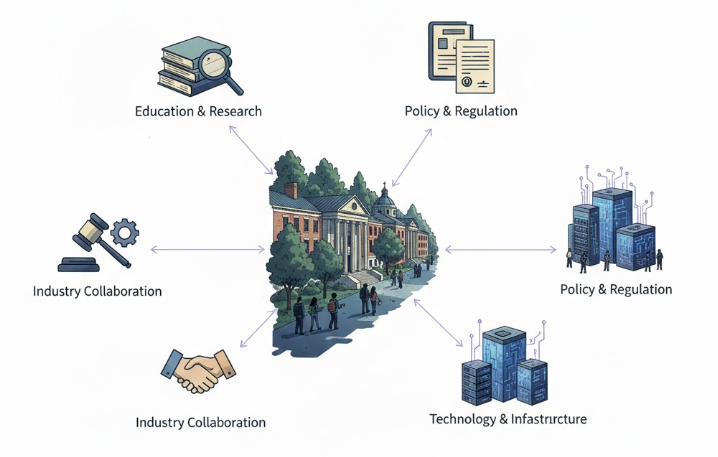
Universities and research institutions must also draw a new map of international cooperation. In an age where ‘advanced country-centric cooperation’ no longer guarantees stability, universities should strengthen multilateral cooperation models with emerging regions like Southeast Asia, the Middle East, Africa, and India. Online joint education, AI-based research collaboration, and industry-linked projects are attracting attention as cooperation methods relatively less susceptible to geopolitical shock. Flexibility and speed in the scope and method of cooperation are key if Korean universities are to gain an edge in global educational competitiveness.
Finally, there is a need to foster talent that can endure uncertainty. We need not just talent that understands technology, but talent that can holistically grasp how technology connects with political, economic, and social structures. The competitiveness of future industries comes not from a specific technology but from the ability to interpret problems, sense changes, and adjust strategy. This is the most crucial direction university education must follow.
The world in 2026 is riskier, more complex, and more uncertain than the past. But this uncertainty does not merely mean chaos. When an order collapses, the opportunity to design a new order emerges. With industry, technology, and politics all being rearranged, what is needed is not fear, but literacy. The ability to read where the world is going, what technology is changing, and what choices politics are forcing is the strategy for the future.
2026 is not a year of crisis, but a year of transition where a new leap is possible. If Korea can shed the existing framework and if industry, universities, and research institutions can draw a New Map together, the reconfiguration of the world order can certainly be an opportunity for Korea.
Ultimately, the power to survive uncertainty is not prediction but design. And now, it is time to begin that design.
#2026Trends #IndustryOutlook #GlobalGeopolitics #SupplyChainRestructuring #AIBubble #ClimatePolicy #GLP1 #TradeRisk #SpotlightYou #EconomicOutlook2026 #HigherEducationPolicy



Leave a Reply