
This post is also available in:
 한국어 (Korean)
Questioning the Design Void in Higher Education Funding After the Abolition of National Scholarship Type II
Why “Tuition Hike” Alone Doesn’t Explain Everything
Recent debates surrounding university tuition focus on “how much it will rise,” but the essence of this policy shift is not about price adjustment itself. The core issue is that the government’s long-standing method of managing higher education finance has entered a transitional phase. Whether tuition increases is merely one outcome; the reality is that the indirect regulatory mechanisms used to control university finances are being dismantled, shifting the locus of responsibility.
The problem is that this shift is proceeding without sufficient societal explanation or institutional design. Tuition is not just a collection item; it is a central pillar of higher education funding. Previously, the government set tuition freezes as a policy goal, restricting university choices through financial linkages rather than direct legal regulation. The current measures signal a modification of that structure. Therefore, the present debate must go beyond pros and cons regarding tuition hikes and approach the issue by examining how financial responsibility is being redistributed among the state, universities, and students.
National Scholarship Type II: A Scholarship System or an Administrative Tool?
While National Scholarship Type II was nominally a scholarship program, it functioned in practice as a tool for managing university tuition policy. The system was designed to provide financial support only to universities that froze or lowered tuition, creating a structure where a university’s decision on tuition was directly linked to government funding. Formally, it appeared to be an autonomous choice by universities, but in reality, it was a form of indirect control through financial incentives.
While this method effectively suppressed tuition increases in the short term, it revealed structural limits over time. As inflation and education costs accumulated, university finances became increasingly rigid. Some universities repeatedly chose to delay internal investment and personnel cost adjustments just to maintain eligibility for Type II scholarships. Given that National Scholarship Type II functioned more as a device to manage university pricing rather than a direct student support system, its abolition can be interpreted as a shift in administrative methodology rather than a mere adjustment of a scholarship program.
Consequences of an 18-Year Tuition Freeze
The tuition freeze policy began as a choice to minimize social backlash and suppress the burden of educational costs, but as it surpassed a decade, it accumulated structural burdens. While nominal tuition remained largely unchanged for a long period, inflation, labor costs, and facility maintenance expenses rose steadily. Consequently, university finances effectively shrank, and the capacity for educational investment was inevitably limited.

This is not simply a management issue for specific universities; it is an institutional consequence of a prolonged freeze policy. Private universities became particularly vulnerable under this system. Despite handling a significant portion of higher education, private institutions—unlike national universities—lack a stable state funding structure and have no clear means of expanding revenue other than tuition. The freeze was a social demand, but it simultaneously fossilized the financial structure of private universities. This long-term freeze explains why some universities were forced to prioritize maintenance costs over improving educational infrastructure or research investment.
Liberalization Permitted, but…
While this policy shift sends a message of easing tuition regulations, a concrete blueprint for subsequent operations has not been sufficiently presented. Institutional mechanisms like the legal ceiling and the Tuition Review Committee remain, but whether these devices can actually adjust student burden and lead to responsible university decisions is a separate issue. Granting autonomy is not the same as creating an environment where autonomy can function.
The Tuition Review Committee is legally a body that guarantees student participation, but in reality, it often operates as a formal procedure due to information asymmetry and time constraints. If the consultative structure between universities and students does not function effectively after the government withdraws indirect regulation, liberalization may be perceived merely as a transfer of responsibility. To prevent this policy change from becoming a new source of conflict, discussions on how to ensure transparency in financial spending and educational investment must follow.
Widening Gaps Between Universities
A tuition hike is expressed as a single number, but its impact varies drastically depending on the university’s location and structure. Large universities in the Seoul metropolitan area may find room to translate an increase into educational investment, but for regional universities with unstable student recruitment, a tuition hike can be a double-edged sword. Even with the same percentage increase, the effect on finances and the signal to student demand differ.
Therefore, this policy change is likely to highlight disparities between universities rather than produce a uniform result. Particularly, in a structure where national universities maintain a tuition freeze stance, the relative imbalance may intensify. The difference in financial structures between national universities supported by state funds and private universities dependent on tuition is likely to expand further. While tuition liberalization may seem to offer the same opportunity to all, we must not overlook that the range of choices and risks is distributed differently according to each university’s specific conditions.
Why the Debate on Student Burden Persists
The reason the tuition debate repeats with every policy change is not simply because of the amount of the increase. It is because social consensus on who should bear the cost of higher education remains incomplete. Tuition is viewed both as an individual’s choice cost and as payment for an educational service with strong public characteristics. Without resolving this dual nature, debates over the burden are destined to repeat.
Resistance from students and parents is closer to structural anxiety than emotional pushback. Even with a legal ceiling, the perceived burden inevitably increases in a structure where hikes accumulate, and trust in whether the scholarship system can sufficiently offset this is not high. Unless the government provides a clear explanation of how student burdens will be managed after withdrawing indirect regulation, this policy shift is more likely to be a prequel to the next conflict rather than the end of the debate.
Accountability: The Flip Side of Autonomy
University financial autonomy has long been a sought-after value, but consensus on its scope and conditions has not sufficiently accumulated. Higher education has the character of a public good that cannot operate solely on market logic, yet universities are also organizations required to exercise autonomous judgment and responsibility. Tuition liberalization is a matter of recalibrating the balance between these two attributes.
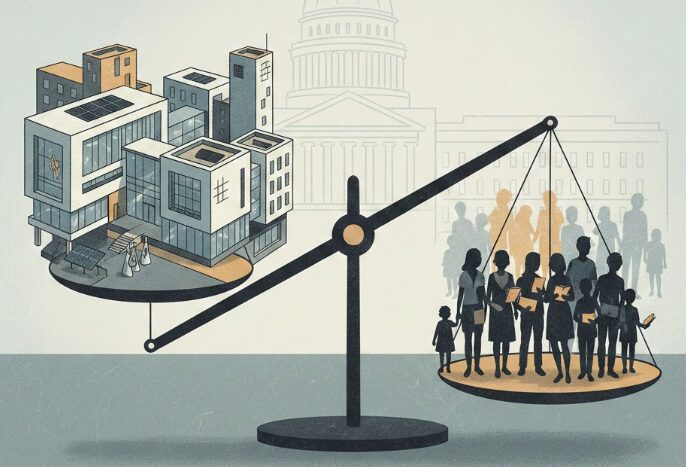
The moment autonomy is granted, universities do not just gain the freedom of financial operation; they also take on social responsibility and the duty of accountability. The question is whether this responsibility structure is sufficiently supported institutionally. To ensure that tuition hikes lead to improved educational quality and financial health, transparent disclosure of how the increased funds are used and their performance is essential. To prevent autonomy from being misunderstood as neglect, internal decision-making structures and external accountability must be strengthened simultaneously. Otherwise, financial liberalization will likely be perceived not as an expansion of university freedom, but as a way to transfer the burden of conflict to internal members.
Without Preparing for the Post-Tuition Era, the Debate Will Repeat
This policy change is unlikely to end as a short-term debate over whether to raise tuition. The abolition of National Scholarship Type II is merely a decision to dismantle one device; it is not the result of redesigning the overall higher education funding system. Unless discussions follow on how to adjust the sustainability of university finances, the management of student burdens, and the state’s financial responsibility after easing regulations, the same debate will inevitably repeat in a few years.
Ultimately, the success or failure of this change depends not on the tuition hike itself, but on how the “aftermath” is designed. Without institutional mechanisms to secure both autonomy and the public nature of university finances, the policy shift is likely to be a temporary “breathing room” at best. What is needed to end the tuition debate is not a simple yes or no to the increase, but a process of re-reaching a social consensus on the responsibility structure surrounding higher education funding.





Leave a Reply